
Introduction to Sustainable Diving Practices
The Philippines is widely recognized as one of the most biologically diverse marine regions in the world. Situated within the Coral Triangle, the country encompasses more than 7,000 islands and an extensive coastline that supports coral reefs, mangroves, seagrass beds, and deep-sea ecosystems. These habitats sustain thousands of marine species and provide livelihoods for coastal communities. As dive tourism continues to grow, sustainable diving practices have become essential to preserving ecological integrity while supporting economic development.
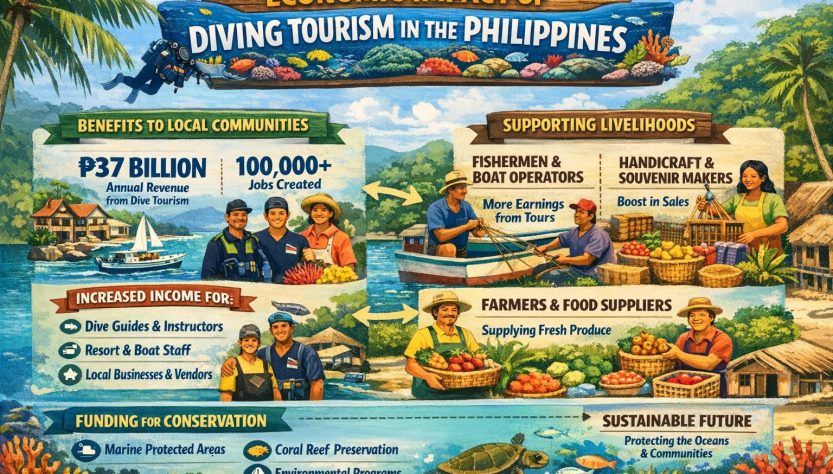
Tourism contributes significantly to the Philippine economy, and diving is one of its major attractions. Sites such as Tubbataha Reefs Natural Park, Apo Island, Malapascua, and Anilao attract divers from around the world. Increased visitation, however, places pressure on reefs already facing climate change, coastal development, and fishing impacts. Sustainable diving practices aim to reduce additional stress on these ecosystems while allowing people to experience and understand them.
Understanding Marine Ecosystems
Marine ecosystems in the Philippines are interconnected networks shaped by biological diversity and oceanographic processes. Coral reefs form the structural foundation of many dive sites. Hard corals build limestone skeletons that provide shelter and feeding grounds for fish, invertebrates, and other organisms. Soft corals, sponges, and algae add further habitat complexity. Seagrass meadows serve as nurseries for juvenile fish and feeding grounds for species such as sea turtles and dugongs, while mangroves protect shorelines and filter sediment before it reaches offshore reefs.
These ecosystems function within narrow environmental tolerances. Water temperature, salinity, and light availability influence coral health. When corals experience environmental stress, such as elevated sea temperatures, they may undergo bleaching. Physical contact, anchor damage, or sediment disturbance can compound these stresses. Even minor, repeated disturbances from divers can affect coral growth and reef resilience over time.
Fish species diversity in Philippine waters is among the highest globally. Reef fish play various ecological roles, including herbivory, predation, and nutrient cycling. Invertebrates such as mollusks, crustaceans, and echinoderms contribute to reef stability and productivity. Apex predators, including reef sharks, help regulate population dynamics. The removal or disruption of one component can have cascading effects on the broader ecosystem. Divers who understand these interdependencies are better equipped to act responsibly underwater.
Principles of Sustainable Diving
Sustainable diving focuses on minimizing environmental disturbance while promoting awareness and conservation. It requires both individual responsibility and collective standards within the dive industry. The foundation begins with proper training. Divers must develop reliable buoyancy control to maintain neutral positioning in the water column. Good buoyancy reduces accidental contact with corals or sediment and prevents unintentional fin kicks that may damage fragile organisms.
Maintaining a safe distance from marine life is another essential principle. Touching coral can remove protective mucus layers, introduce pathogens, or cause structural breakage. Handling marine animals may induce stress responses or alter natural behavior. Even seemingly resilient species can be sensitive to repeated interaction. Observing wildlife without interference preserves authentic ecological interactions and reduces long-term impacts.
Equipment management contributes significantly to sustainability. Regulators, gauges, and cameras should be streamlined and secured to avoid dragging along the seabed. Photographers, in particular, must ensure that pursuit of imagery does not compromise stability or proximity guidelines. Responsible underwater photography emphasizes patience and positioning over close physical approach.
Divers are also encouraged to avoid collecting souvenirs such as shells, coral fragments, or marine organisms. Removing even small items can disrupt microhabitats or affect breeding grounds. Adhering to local regulations, including marine protected area rules, supports formal conservation frameworks. Organizations such as PADI provide guidance and education on conservation-oriented diving techniques and citizen science participation.
Training and Environmental Awareness
Education strengthens sustainable behavior. Dive briefings that include ecological information help divers understand the characteristics of specific sites. Learning to identify key species fosters appreciation while reinforcing the need for non-intrusive observation. Advanced training programs may include peak performance buoyancy courses or conservation specialties that examine reef ecology and marine protection strategies in greater depth.
Citizen science initiatives offer structured opportunities for divers to contribute to research. Reef monitoring programs collect data on coral cover, fish abundance, and reef health indicators. Participation requires adherence to standardized observation methods, which emphasize minimal interference. Data collected by trained volunteers can assist marine scientists and policymakers in assessing reef conditions.
Environmental awareness extends beyond the dive itself. Reducing single-use plastics, selecting reef-safe sunscreen formulations, and managing waste responsibly before and after dives are part of a comprehensive sustainability approach. Although individual actions may appear limited in scope, cumulative behavior across thousands of divers has measurable effects.
Eco-friendly Dive Operations
Dive operators play a central role in implementing sustainable tourism models. Responsible operators integrate environmental considerations into daily business practices. Boat maintenance and fuel efficiency can reduce emissions and minimize leakage of pollutants. Mooring buoys are preferable to anchoring directly on reefs, as anchors can cause immediate structural damage. Many marine protected areas in the Philippines have installed buoy systems to protect popular dive sites.
Waste management protocols are equally important. Operators may establish onshore sorting and recycling systems, ensure proper disposal of hazardous materials such as batteries, and limit onboard waste generation. Freshwater conservation measures help reduce pressure on local supplies, particularly in small island communities where resources are limited.
Training staff in environmental stewardship ensures that sustainability standards are consistently applied. Dive guides influence diver behavior by modeling proper buoyancy control and reinforcing site-specific rules. Some operators seek certification through environmental programs that assess operational practices. Examples include Green Fins, coordinated by the United Nations Environment Programme and The Reef-World Foundation, accessible through Green Fins. Such frameworks provide structured guidelines and periodic assessments.
Economic sustainability is also a component of eco-friendly operations. Fair employment practices and partnerships with local suppliers ensure that financial benefits remain within host communities. Long-term environmental health directly supports business continuity, aligning conservation objectives with commercial interests.
Marine Protected Areas and Regulatory Frameworks
The Philippines has established numerous marine protected areas (MPAs) to conserve biodiversity and replenish fish stocks. MPAs may impose restrictions on fishing, anchoring, or visitor numbers. Well-managed MPAs often demonstrate higher fish biomass and coral cover compared to unprotected sites. Divers contribute to the effectiveness of these areas by complying with regulations and paying conservation fees where required.
Government agencies, including the Department of Environment and Natural Resources, collaborate with local governments to oversee coastal resource management. Enforcement capacity can vary across regions, making compliance by visitors particularly important. Transparent fee systems and community-driven monitoring programs strengthen accountability and improve reef health outcomes.
Carrying capacity assessments help determine the number of divers that can safely access a site without causing degradation. Staggered dive schedules and seasonal restrictions may be implemented to reduce crowding. Operators who adhere to these limits support long-term site viability.
Engaging with Local Communities
Community engagement is fundamental to sustainable marine tourism. Many Philippine coastal communities rely on fishing and small-scale tourism for income. Integrating diving tourism with community development initiatives can reduce resource extraction pressure and generate alternative livelihoods. Training local residents as dive guides, boat crew, or marine park rangers builds capacity and strengthens stewardship.
Educational outreach programs in schools and barangays promote marine conservation awareness among younger generations. Programs often address waste management, reef ecology, and sustainable fisheries practices. When communities recognize the economic and ecological value of healthy reefs, compliance with conservation measures tends to increase.
Divers can support local economies by selecting locally owned accommodations, purchasing regionally made goods, and participating in community-organized tours. Respecting local customs and regulations contributes to positive relationships between visitors and residents. Effective communication between operators and community leaders ensures that tourism development aligns with environmental priorities.
Climate Change and Long-term Sustainability
Global climate change presents a systemic challenge to marine ecosystems. Rising sea temperatures, ocean acidification, and intensified storm events affect coral growth and survival. While individual divers cannot directly reverse global trends, mitigation and adaptation measures at local levels can enhance reef resilience. Reducing local stressors such as physical damage and pollution improves the capacity of corals to recover after bleaching events.
Some dive centers participate in coral restoration projects that involve nursery cultivation and outplanting of coral fragments. Although restoration does not replace large-scale conservation, it can supplement protection efforts in degraded areas. Participation in such programs requires scientific oversight and adherence to best practices to avoid unintended consequences.
Carbon-conscious travel planning represents another dimension of sustainability. Divers may consider extended stays rather than multiple short trips or support operators investing in renewable energy solutions. Transparent accounting of environmental impacts encourages more informed choices within the tourism industry.
Conclusion: Striving for Sustainability
Sustainable diving practices in the Philippines integrate environmental awareness, responsible operations, community participation, and regulatory compliance. Protecting coral reefs and associated ecosystems requires consistent implementation of best practices by divers, operators, and governing bodies. By maintaining careful buoyancy, respecting marine life, supporting eco-certified operations, and engaging constructively with local communities, divers contribute to long-term marine conservation.
The Philippines’ marine ecosystems represent both ecological assets and sources of economic livelihood. Ensuring their continuity requires a balanced approach that recognizes ecological limits while facilitating responsible tourism. Through structured training, effective management of marine protected areas, and collaborative community initiatives, sustainable diving can support both conservation and regional development objectives.