Introduction to Technical Diving in the Philippines
Technical diving in the Philippines provides experienced divers with access to deeper waters, extended bottom times, overhead environments, and complex dive profiles that go beyond the limits of standard recreational training. With more than 7,000 islands, the country offers a wide range of marine environments suitable for advanced instruction. From steep walls descending beyond recreational depths to historic wartime wrecks resting on the seabed, the Philippines presents ideal conditions for structured technical training.
Unlike entry-level recreational diving, technical diving involves staged decompression, specialized gas mixtures, redundant systems, and meticulous dive planning. Courses are designed to build step-by-step competency in equipment configuration, gas management, decompression strategy, and emergency procedures. Candidates enrolling in technical programs in the Philippines often combine formal instruction with exploration of some of Southeast Asia’s most diverse underwater terrains.
Why Choose the Philippines for Technical Diving?
The Philippines sits within the Coral Triangle, a region known for high marine biodiversity. Divers encounter reef systems, pelagic migration routes, steep drop-offs, and artificial reefs formed by shipwrecks. The geographic diversity across destinations such as Puerto Galera, Subic Bay, Cebu, Bohol, Batangas, and Palawan ensures that different technical disciplines can be practiced in suitable environments.
One significant advantage is the consistent warm water temperatures, typically ranging between 26°C and 30°C throughout the year. Warm water extends dive comfort and simplifies thermal protection compared to colder technical destinations that require heavy exposure suits. Calm conditions during much of the year also support skill development in controlled environments before progressing to more challenging currents or deeper sites.
Cost efficiency is another factor. Compared with North America or parts of Europe, course tuition, boat fees, and accommodation in the Philippines are often more affordable. Many dive centers operate integrated training facilities that include gas blending stations, classroom space, and access to multiple dive sites suitable for staged progression.
English is widely spoken, simplifying instruction for international students. Additionally, most established technical instructors are affiliated with global certification agencies such as Technical Diving International (TDI), Global Underwater Explorers (GUE), and PADI TecRec, allowing divers to obtain internationally recognized credentials.
The Structure of Technical Diving Education
Technical diving education is cumulative. Each level builds on previous certification and logged experience. Before entering technical courses, divers usually hold advanced recreational certification and demonstrate competency in buoyancy control, navigation, and emergency procedures.
Training programs emphasize five key areas: equipment configuration, dive planning, gas management, decompression theory, and team communication. Students learn to analyze breathing gases, calculate decompression obligations, and handle multiple-stage cylinders. Courses are intensive, combining classroom study with confined-water practice and open-water application dives.
A defining characteristic of technical training is the development of disciplined procedures. Standardized equipment placement, valve drills, propulsion techniques, and ascent protocols promote consistency within dive teams. The Philippine training environment allows repetition of these drills in varied but controlled conditions.
Advanced Nitrox and Decompression Procedures
One of the most common entry points into technical diving is the Advanced Nitrox course. This program expands a diver’s ability to use enriched air mixtures containing higher percentages of oxygen than recreational limits typically allow. The main objective is to understand oxygen exposure management, partial pressure limits, and gas-switching practices. Students also begin training with twin-cylinder configurations or sidemount systems.
Closely related is the Decompression Procedures course. Here, divers intentionally exceed no-decompression limits and conduct planned, staged decompression stops using one or more decompression gases. Training covers decompression models, contingency planning, accelerated decompression techniques, and lost-gas scenarios. In Philippine waters, training depths often range between 40 and 50 meters, depending on agency standards and site conditions.
Locations such as Puerto Galera offer sloping reefs and wall systems suitable for controlled decompression ascents. The gradual terrain simplifies staged ascents while allowing instructors to monitor student positioning and buoyancy.
Trimix Diving and Deep Exploration
For dives extending beyond 40 meters, many programs introduce Trimix, a breathing gas composed of oxygen, nitrogen, and helium. The addition of helium reduces narcosis and allows clearer cognitive function at depth. Trimix training includes advanced gas planning, handling of hypoxic mixtures, and management of multiple-stage cylinders.
Subic Bay has become known for deep wreck training. World War II vessels rest at depths suitable for both normoxic and hypoxic trimix courses. These submerged structures provide realistic deep-dive conditions while offering visual reference points that assist in orientation and depth control.
Deep training emphasizes redundancy. Divers carry backup regulators, independent buoyancy systems, and multiple cutting tools. Valve drills and gas-sharing exercises become more complex at trimix levels. Dive planning sessions can extend several hours, with students calculating best-mix formulas, maximum operating depths, and decompression schedules using planning software and backup tables.
Cave and Overhead Environment Training
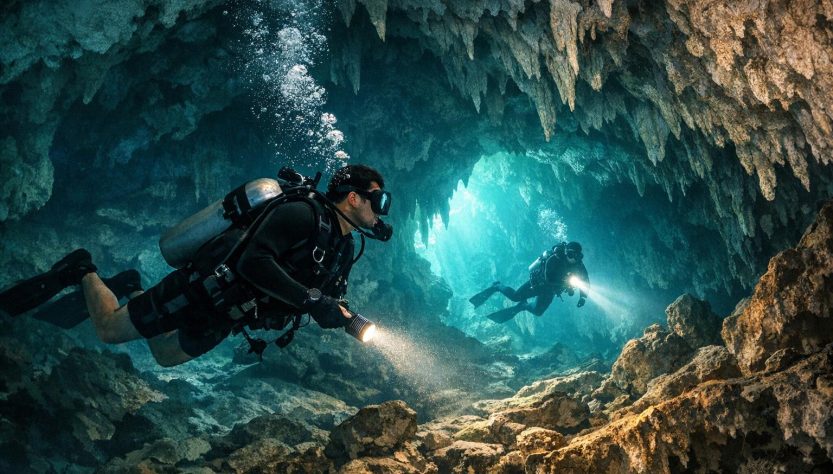
Although less widespread than reef and wreck diving, cave diving in the Philippines has gained attention in certain regions, particularly in Palawan and parts of Mindanao. Overhead environments remove the option of direct vertical ascent, requiring strict adherence to line protocols and gas management rules.
Cave diving courses focus on guideline handling, reel techniques, restricted passage negotiation, and lost-line recovery. Divers practice propulsion methods that minimize silting and maintain visibility. Equipment configuration becomes even more critical, with streamlined setups to prevent entanglement.
Training begins in cavern zones with visible exits before progressing into full cave penetration under instructor supervision. Because overhead diving increases risk complexity, prerequisites typically include advanced nitrox and decompression certification, along with significant logged dive experience.
Wreck Diving as a Technical Discipline
The Philippines’ maritime history has left numerous wrecks scattered across its waters. Technical wreck diving frequently overlaps with decompression and trimix training. In Subic Bay, divers explore cargo ships, tankers, and naval vessels lying beyond recreational depth limits.
Penetration dives require additional skills, including line running inside confined spaces and navigation through interior structures. Students practice maintaining neutral buoyancy in enclosed environments without disturbing sediment. Emphasis is placed on non-invasive diving practices to preserve historical integrity.
Wreck courses often incorporate scenario planning such as simulated light failures or guideline breaks. Philippine wreck sites provide consistent training grounds because many vessels rest within manageable depth ranges while still requiring staged decompression on ascent.
Equipment and Gas Blending Infrastructure
Technical diving depends on reliable access to high-quality gases and maintenance facilities. Established Philippine centers operate blending stations that supply nitrox and trimix using partial-pressure or membrane blending systems. Oxygen-clean cylinders, analyzers, and booster pumps are standard components of technical operations.
Most training facilities provide twin sets, sidemount harnesses, stage cylinders, and backplates for student use, though many divers invest in personal equipment for consistency. Workshops associated with reputable centers offer regulator servicing and cylinder inspection aligned with international standards.
Divers are trained to analyze every cylinder before use and log mixture contents. This culture of verification reinforces personal responsibility within technical diving. The availability of blended gases in major dive areas simplifies logistics for visiting divers taking advanced courses.
Preparing for a Technical Diving Course
Preparation for technical training involves both physical readiness and theoretical study. Candidates must demonstrate stable buoyancy, precise trim, and strong situational awareness. Many instructors recommend practicing propulsion techniques and ascending with controlled stop durations before enrolling.
A typical prerequisite includes a minimum number of logged dives, often between 50 and 100 depending on the program level. Advanced Open Water and rescue-level certifications are frequently required. Medical clearance may be requested for older divers or those with preexisting conditions.
Students benefit from reviewing physics principles related to partial pressure, gas density, and decompression theory. Familiarity with dive computers and planning software also contributes to smoother progression through classroom components.
Environmental Considerations and Responsible Practice
Technical diving carries increased environmental responsibility due to deeper and more sensitive ecosystems. Philippine coral reefs and wreck sites require careful buoyancy control to prevent contact. Many operators maintain strict environmental codes, limiting class sizes and discouraging artifact removal.
Some centers collaborate with conservation organizations such as Project AWARE and regional marine research institutions to promote reef monitoring and debris removal initiatives. Technical divers, with extended bottom times and advanced planning capacity, sometimes participate in organized clean-up dives or data collection projects.
Safety Culture and Risk Management
Risk management in technical diving extends beyond equipment redundancy. It includes structured team briefings, emergency simulations, and conservative decision-making. Dive plans incorporate contingency decompression strategies and lost-gas calculations.
Philippine operators typically adhere to international safety frameworks established by training agencies. Evacuation plans, oxygen kits, and access to recompression facilities are standard components of responsible operations. Metro Manila and Cebu host hyperbaric chambers accessible within emergency response planning distances from most technical diving destinations.
Team-based diving is the norm in technical environments. Divers plan profiles collaboratively and maintain close proximity during descent, bottom time, and ascent. Clear communication protocols reduce ambiguity, particularly during gas switches and decompression stops.
Long-Term Progression and Continuing Education
After initial technical certifications, divers often pursue advanced trimix, cave progression, or instructor-level programs. The Philippines allows continued skill refinement because multiple dive environments are accessible within short travel distances. Divers can complete decompression training in one region and then gain deep wreck exposure in another without leaving the country.
Some professionals choose to remain in the Philippines to work toward technical instructor ratings. The presence of integrated resort facilities, training classrooms, and reliable marine logistics supports extended study periods.
Conclusion
The Philippines offers a structured and resource-rich environment for technical diving education. Its combination of biodiversity, accessible deep-water terrain, established blending infrastructure, and internationally affiliated instructors makes it suitable for divers seeking progression beyond recreational limits. Through disciplined training, adherence to safety protocols, and responsible environmental practices, technical divers in the Philippines can develop advanced competencies while exploring complex underwater settings that extend well past conventional depth boundaries.