Diving in the Philippines: Unique Experiences to Explore
The Philippines is an archipelago of more than 7,000 islands located within the Coral Triangle, a region recognized by marine scientists as one of the most biologically diverse marine areas on the planet. Its geographic position, tropical climate, and complex system of currents have created an environment where coral reefs, deep walls, seamounts, and wreck sites flourish side by side. For divers, this combination translates into year-round opportunities to experience a broad range of underwater environments within relatively short travel distances.
Water temperatures in most diving regions range from 24°C to 30°C throughout the year, allowing comfortable diving in lightweight exposure suits. Visibility can exceed 30 meters in offshore sites during optimal conditions, particularly in remote marine parks. From large pelagic encounters in open water to detailed macro photography along sandy slopes, the Philippines presents varied underwater landscapes that suit beginners, advanced divers, photographers, and technical divers alike.
Tubbataha Reefs Natural Park
Located in the middle of the Sulu Sea, Tubbataha Reefs Natural Park is accessible primarily via liveaboard vessels during a short season from March to June, when sea conditions are at their most stable. The protected area covers nearly 100,000 hectares and consists of two main atolls and a smaller reef system. Its isolation from major population centers has played a significant role in preserving its coral cover and fish biomass.
Divers at Tubbataha frequently encounter large schools of jacks, barracudas, and snappers moving along steep reef walls. Reef sharks, including whitetip and grey reef sharks, are common sightings. Manta rays and occasional hammerheads are seen in certain channels where currents concentrate plankton. Due to the exposure of many sites to open-ocean currents, diving conditions may require experience in drift diving and buoyancy control.
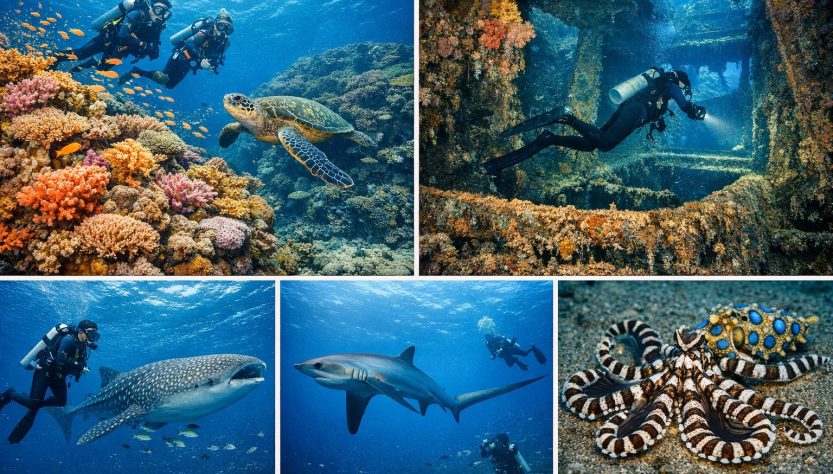
The coral formations in Tubbataha include expansive table corals, soft coral gardens, and dramatic drop-offs that descend into deep blue water. These habitats support hawksbill and green sea turtles, vast numbers of reef fish, and smaller invertebrates that form the foundation of the ecosystem. Strict management by park authorities, including limited visitor numbers and patrols, contributes to the ongoing preservation of diverse marine ecosystems. More information about regulations and access can be found through the official park management at tubbatahareef.org.
Apo Reef Natural Park
Situated off the coast of Occidental Mindoro, Apo Reef Natural Park is recognized as the second largest contiguous coral reef system in the world. The reef complex surrounds three small islands and features an extensive lagoon, steep outer walls, and numerous pinnacles. Its relative accessibility compared to more remote offshore sites makes it a practical option for divers traveling from Manila or Sablayan.
Underwater topography at Apo Reef includes towering drop-offs and channels where currents can attract pelagic species. Divers commonly encounter reef sharks, turtles, and large groupers patrolling the reef edges. Schools of fusiliers and anthias move above stunning coral gardens, creating dynamic movement across the reef face. In some seasons, manta rays pass through cleaning stations along the outer slopes.
Night diving within sheltered sections of the reef reveals a different aspect of the ecosystem, with crustaceans, cuttlefish, and nocturnal fish species emerging from hiding. Conservation initiatives managed by local authorities aim to reduce fishing pressure and promote responsible tourism practices. Information on park guidelines and visitor coordination is available via aporeefnaturalpark.ph.
Coron Shipwrecks
Coron, located in northern Palawan, offers a distinct diving experience centered on historical wreck exploration. In September 1944, several Japanese supply ships were sunk during an air raid, and today at least eleven wrecks remain scattered across Coron Bay at depths ranging from approximately 10 to over 40 meters.
These wrecks vary in size and structural complexity. Some, such as the Irako and Okikawa Maru, are large cargo vessels with penetration routes accessible to divers holding appropriate certifications. Others, like the Lusong Gunboat, lie in shallower water and can be explored by less experienced divers under professional supervision. Over decades, the steel hulls have transformed into artificial reefs, supporting coral growth and attracting reef fish, lionfish, nudibranchs, and schools of batfish.
Visibility in Coron can vary depending on season and plankton levels, but conditions often allow clear views of mast structures, cargo holds, and engine rooms. Technical divers may explore deeper sections using advanced gas mixtures, while recreational divers remain within no-decompression limits. Strict adherence to wreck diving protocols, including the use of guide lines and redundant air sources for penetration, is recommended.
Beyond the wrecks themselves, Coron offers limestone cliffs and sheltered bays that create scenic surface intervals between dives. Local dive operators coordinate access, and environmental guidelines are overseen by municipal authorities to balance tourism with site protection.
Anilao, Batangas
Approximately three hours by road from Manila, Anilao in Batangas Province is widely regarded as one of the Philippines’ leading destinations for macro diving. The sites in this region typically feature sandy slopes, rubble areas, and small coral bommies that provide habitat for rare and cryptic species.
Divers and underwater photographers frequently search for colorful critters such as flamboyant cuttlefish, blue-ringed octopus, mimic octopus, and a wide variety of nudibranch species. Pygmy seahorses inhabit certain gorgonian sea fans, while rhinopias and frogfish remain camouflaged among sponges and debris. Dive guides in Anilao are known for their ability to locate small marine species through detailed knowledge of microhabitats.
Visibility can fluctuate due to plankton-rich waters, which in turn support abundant marine life. The calm bays of Anilao are suitable for training dives and photography workshops, and many resorts provide dedicated camera facilities. While macro life is a central draw, several offshore sites also feature walls and drift scenarios with larger reef fish.
As one of the country’s earliest developed dive areas, Anilao maintains an established infrastructure of dive resorts, training centers, and conservation programs. Local marine protected areas contribute to sustaining coral health and replenishing fish populations.
Dauin and Apo Island
In Negros Oriental, near the city of Dumaguete, Dauin and Apo Island present complementary diving environments within a short boat ride of each other. Dauin’s shoreline is characterized by volcanic sand slopes and seagrass beds that have become known internationally for muck diving.
Muck diving involves careful exploration of sandy substrates in search of unique and bizarre species adapted to camouflage. Divers may encounter hairy frogfish, ghost pipefish, mantis shrimp, and other unusual organisms partially concealed beneath sediment. Slow, controlled fin movements are essential to avoid disturbing visibility.
A short distance offshore, Apo Island offers a contrasting landscape of healthy coral reefs and strong currents along certain channels. Established as one of the Philippines’ earliest community-managed marine sanctuaries, the island demonstrates the long-term impact of conservation. Its reefs attract large shoals of jacks and snappers, sea turtles grazing on algae, and dense aggregations of reef fish.
The combination of macro-focused sites in Dauin and wide-angle reef scenes at Apo Island allows divers to experience two distinct underwater environments within a single trip. Local initiatives continue to promote reef monitoring and diver education.
Malapascua Island
North of Cebu, Malapascua Island has earned a global reputation for reliable encounters with thresher sharks. The primary dive site, Monad Shoal, is a submerged seamount where thresher sharks visit cleaning stations at dawn. Divers typically enter the water before sunrise and descend to depths of around 20 to 30 meters to wait near designated observation points.
Thresher sharks are identifiable by their elongated upper tail lobes, which they use to stun prey. At cleaning stations, small fish remove parasites from the sharks’ bodies. Strict guidelines regulate diver behavior to minimize disturbance, including maintaining distance and limiting flash photography.
In addition to threshers, Malapascua offers dives at Gato Island, known for reef sharks and sea snakes, as well as coral gardens suitable for recreational divers. While Monad Shoal requires advanced open water certification due to depth, other sites accommodate less experienced participants under supervision.
Donsol – Butanding Interaction
Donsol in Sorsogon Province is recognized for seasonal encounters with whale sharks, locally referred to as whale shark or “butanding.” Unlike locations where feeding practices alter animal behavior, Donsol emphasizes regulated, interaction-based tourism focused primarily on snorkeling. Whale sharks migrate through the area between approximately November and May, with peak sightings varying by year.
While diving directly with whale sharks in Donsol is less common than snorkeling, nearby dive sites such as Manta Bowl feature cleaning stations visited by manta rays and occasional pelagic species. These offshore dives can involve strong currents and are suited to experienced divers.
Visitor briefings conducted by local guides outline responsible interaction protocols, including maintaining minimum distances and avoiding physical contact. The program has become a model for community-based marine tourism in the Philippines.
Conclusion
The Philippines offers a broad spectrum of diving environments shaped by geography, ocean currents, and long-standing marine conservation efforts. Remote atolls such as Tubbataha provide encounters with pelagic species and expansive coral reefs, while coastal regions like Anilao and Dauin focus on macro biodiversity. Historical wrecks in Coron, shark interactions in Malapascua, and seasonal whale shark sightings in Donsol add further diversity to the national diving profile.
Travel logistics between islands typically involve domestic flights and boat transfers, and seasonal weather patterns influence site accessibility. With appropriate planning and adherence to environmental guidelines, divers can explore reefs, wrecks, and open-water sites that collectively represent one of the most varied underwater landscapes in Southeast Asia.