
Introduction
The Philippines is widely recognized as one of the world’s leading scuba diving destinations due to its extensive coastline, tropical climate, and exceptional marine biodiversity. Comprising more than 7,600 islands, the country lies within the Coral Triangle, a region known for possessing the highest concentration of marine species on the planet. Divers visiting the Philippines encounter coral reefs, pelagic species, macro life, historic wrecks, and steep underwater walls within relatively short travel distances. The accessibility of dive sites, combined with a well-developed tourism infrastructure, makes the archipelago suitable for both recreational and technical divers.
Planning a diving trip to the Philippines requires consideration of seasonal weather patterns, transportation logistics between islands, certification requirements, and conservation regulations. While the country offers year-round diving in various regions, conditions vary by location. Understanding the structure of local dive operations, marine park fees, and safety standards will help divers organize an efficient and rewarding itinerary. This guide outlines practical considerations for travelers seeking to maximize their diving experience while adhering to environmental and safety standards.
Best Time to Dive
The Philippines has a tropical maritime climate characterized by a dry season and a rainy season, though regional variations occur due to the country’s wide geographic spread. In general, the most favorable months for diving are from November to May. During this period, the northeast monsoon, locally known as Amihan, brings relatively cooler temperatures, reduced rainfall, and calmer seas across many popular dive regions. Visibility during these months often ranges from 15 to 40 meters depending on the site, making it possible to observe reef structures and schooling fish with clarity.
From June to October, the southwest monsoon, or Habagat, may produce stronger winds and heavier rainfall, particularly along western-facing coasts. However, diving does not cease during these months. Instead, experienced divers and local operators select alternative locations that are sheltered from prevailing winds. For example, when conditions are less favorable in one province, another province may offer protected bays suitable for diving. Careful itinerary design makes year-round diving feasible.
Water temperatures in the Philippines generally range between 26°C and 30°C. A 3mm wetsuit is sufficient for most divers, though those prone to feeling cold during repetitive dives may prefer a 5mm suit. Checking weather forecasts, consulting local dive centers, and reviewing marine park schedules are important steps before finalizing travel dates. Some protected areas have strictly regulated seasons, limiting access to preserve marine ecosystems.
Diving Destinations
The Philippines features a wide range of diving environments, from reef systems and drift dives to deep walls and wreck sites. Selecting locations depends on diver certification level, specific interests such as macro photography or shark encounters, and available travel time.
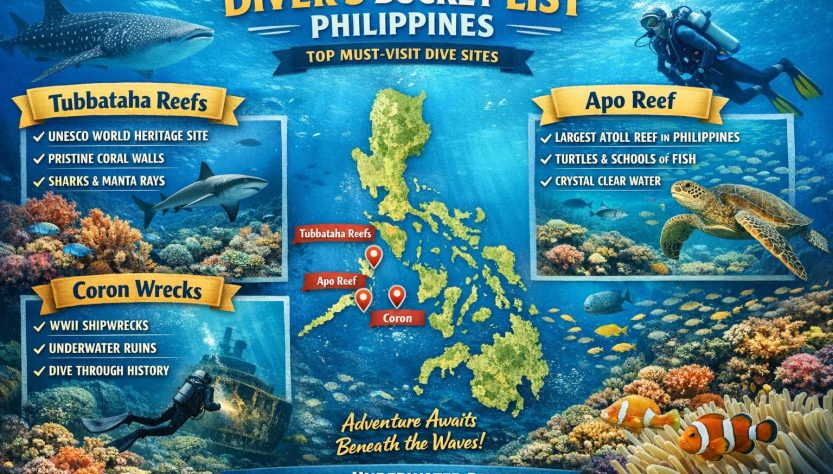
Tubbataha Reefs Natural Park: Situated in the Sulu Sea, Tubbataha is one of the country’s most regulated and pristine marine reserves. Recognized as a UNESCO World Heritage Site, it is accessible only by liveaboard vessels departing primarily from Puerto Princesa in Palawan. The diving season runs approximately from March to June due to sea conditions. The park consists of two main atolls and a smaller reef, offering steep drop-offs, strong currents, and frequent sightings of pelagic species including sharks, manta rays, and large schools of jacks. Because of its remote location, trips usually last between five and seven days. Divers visiting Tubbataha should have advanced certification and experience in current diving.
Malapascua Island: Located off the northern coast of Cebu, Malapascua gained international recognition for consistent early-morning encounters with thresher sharks. Monad Shoal, a submerged seamount, serves as a cleaning station where these sharks are observed at depth, typically around 25 to 30 meters. In addition to pelagic species, Malapascua offers macro dive sites, coral gardens, and several wrecks. The island is accessible via land transfer from Cebu City followed by a short boat ride. Dive operations on the island cater to a range of certification levels, from beginners to technical divers exploring deeper wrecks.
Apo Reef Natural Park: Located off the coast of Occidental Mindoro, Apo Reef is the second-largest contiguous coral reef system in the world. The site features a combination of walls, plateaus, and coral gardens populated by reef sharks, barracudas, and turtles. It can be visited via liveaboard or through multi-day expeditions departing from Mindoro. Conditions may include moderate to strong currents, making buoyancy control and drift diving skills important.
Beyond these well-known sites, other regions provide equally significant experiences. Anilao in Batangas is known for macro photography and critter hunting. Coron in Palawan is recognized for Japanese shipwrecks dating back to World War II, offering penetration opportunities for certified wreck divers. Siquijor, Dauin, and Moalboal provide diverse reef systems and seasonal sardine runs.
Additional destination information, permits, and tourism updates are available through official sources such as this tourism resource.
Essential Diving Equipment
While dive shops throughout the Philippines provide rental equipment, many divers prefer to travel with personal gear for comfort and familiarity. A properly fitted mask and fins enhance performance and reduce the risk of leaks or discomfort during repetitive dives. Regulators and buoyancy control devices should meet recognized safety standards and undergo regular servicing.
A reef-safe wetsuit appropriate to water temperature is recommended. Even in warm waters, exposure protection reduces the risk of abrasions and jellyfish stings. Dive computers are strongly advised, particularly for multi-day dive schedules that involve repetitive or deeper dives. Many operators require each diver to use a computer to monitor nitrogen absorption.
Surface marker buoys (SMBs) are important in areas with boat traffic or drift dives. In regions known for currents, signaling devices can enhance safety during ascents. For night dives, torches with adequate brightness and backup lights are essential. Underwater photographers should carry additional power sources and confirm baggage regulations for lithium batteries when flying.
Transporting equipment between islands may involve domestic flights with luggage limits. Checking airline baggage policies in advance prevents unexpected fees or logistical challenges. Dry bags for boat transfers and padded cases for regulators and cameras help protect equipment from saltwater exposure.
Environmental Considerations
Marine conservation is a priority in many Philippine dive destinations. Numerous sites are located within marine protected areas (MPAs), where local authorities enforce strict guidelines. Divers are expected to maintain neutral buoyancy, avoid physical contact with corals, and refrain from feeding marine life. Anchoring is typically prohibited in protected zones; instead, boats use mooring buoys.
The “leave no trace” principle applies both underwater and on land. Waste management infrastructure can vary across islands, so minimizing single-use plastics and carrying reusable containers contributes to local sustainability efforts. Sunscreens labeled as reef-safe reduce harmful chemical runoff into coastal waters.
Many communities rely on marine tourism as a source of income. Paying marine park fees supports conservation projects, ranger patrols, and reef rehabilitation. Divers are encouraged to choose operators that follow environmentally responsible practices and employ certified local guides. Participation in reef clean-up dives or citizen science initiatives can contribute to monitoring reef health.
Health and Safety Precautions
Divers traveling to the Philippines should review standard travel health recommendations prior to departure. Ensuring routine vaccinations are current and considering additional travel-specific immunizations based on itinerary are prudent measures. A personal first-aid kit, including motion sickness remedies and any prescription medications, is recommended.
Decompression sickness (DCS) remains a global diving risk. Divers should adhere strictly to dive tables or computer guidance, allow sufficient surface intervals, and avoid flying within 18 to 24 hours after the last dive, depending on dive profiles. Hydration plays an important role in reducing DCS risk, particularly in warm climates. Alcohol consumption should be moderated during dive trips.
Recompression chambers are available in several major centers such as Cebu, Manila, and Puerto Galera, though remote sites may require evacuation by boat or air. Purchasing dive insurance that covers hyperbaric treatment and medical evacuation is strongly advised. Policies from recognized providers typically include coverage for technical diving activities if specified.
Before diving, travelers should verify that dive centers employ certified instructors and follow recognized standards from organizations such as PADI, SSI, or NAUI. Equipment maintenance records and emergency oxygen availability are indicators of responsible operations. Orientation briefings generally include review of hand signals, emergency procedures, and local site conditions.
Further guidance on diving-related health topics can be found at this diving health resource.
Logistics and Travel Planning
Travel within the Philippines often involves a combination of international flights, domestic airlines, ferries, and land transfers. Manila and Cebu serve as major gateways. From these hubs, smaller aircraft and ferries connect divers to regional airports and ports. Because connections between islands may not operate daily, coordinating arrival and departure times with dive schedules is important.
Accommodation ranges from budget guesthouses to integrated dive resorts. Many dive resorts offer package rates that include lodging, meals, and a specified number of dives per day. Reviewing cancellation policies, particularly during typhoon season, is advisable. Electricity supply may be limited in remote islands, so storing backup batteries for essential equipment is useful.
Currency exchange is readily available in urban centers, though smaller islands may operate primarily on cash. Automated teller machines may not be consistently accessible in rural locations. Planning sufficient local currency for marine fees, boat transfers, and incidental expenses reduces inconvenience.
Connectivity varies; while urban areas have stable mobile networks, remote islands may have limited internet access. Informing family or emergency contacts of travel itineraries is recommended, especially for liveaboard trips.
Conclusion
The Philippines offers a diverse and technically engaging range of diving environments supported by experienced operators and established conservation programs. With appropriate seasonal planning, suitable equipment preparation, and adherence to environmental standards, divers can explore reef systems, pelagic habitats, and historic wrecks across multiple regions of the archipelago. Careful attention to health precautions, travel logistics, and marine protection regulations ensures that each dive trip operates within safe and sustainable parameters. By approaching the experience with preparation and respect for local guidelines, divers can effectively navigate the logistical and environmental considerations associated with diving in this Southeast Asian nation.